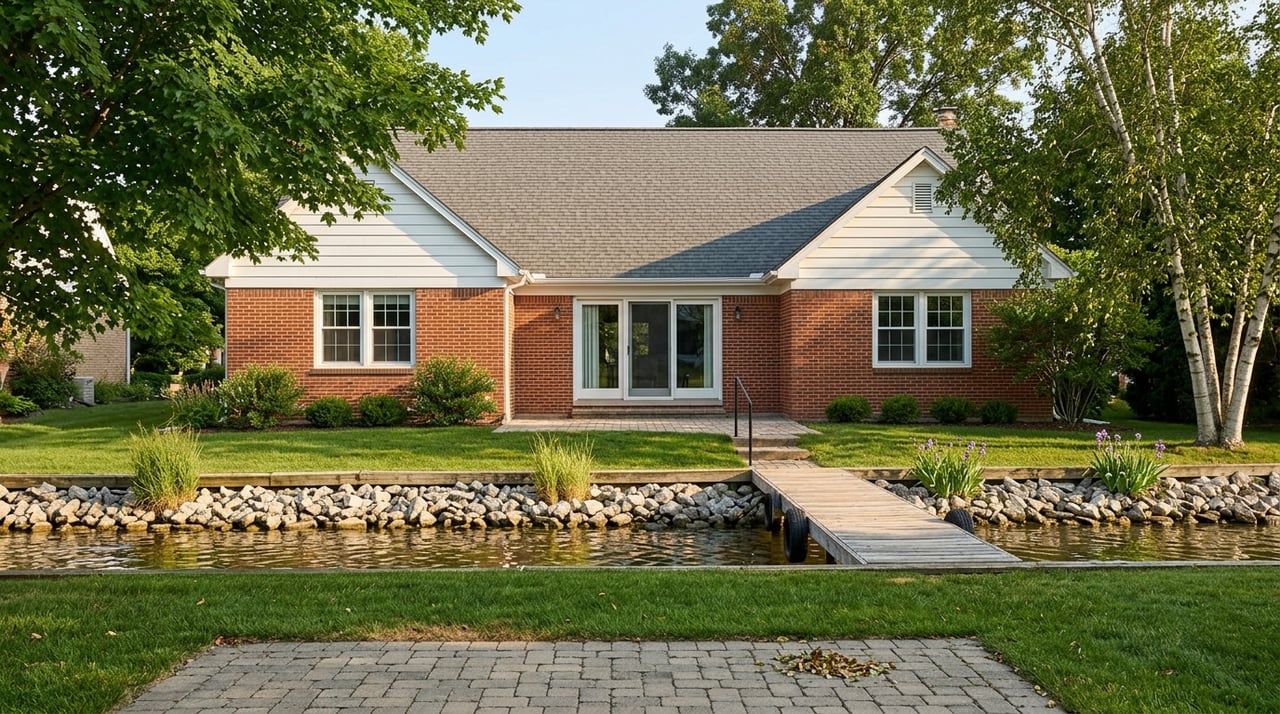
HOA And Shoreline Considerations For Sturgeon Bay Waterfront Homes
June 4, 2026
June 4, 2026
Buying a waterfront home in Sturgeon Bay can feel exciting right up until one simple question changes everything: Can you actually use the shoreline the way you expect? If you are looking at a dock, a slip, a seawall, or even an exterior update, the answer may depend on more than the property itself. The key is knowing what the association allows, what local rules allow, and what Wisconsin waterway rules allow before you close. Let’s dive in.
Waterfront property in Sturgeon Bay is often governed by several layers of rules at once. A home may be affected by recorded restrictions, easements, local zoning, shoreland rules, and state waterway regulations.
That matters because your plans for the property may not match what is legally allowed. A buyer should not assume a dock addition, shoreline project, exterior change, or rental use is permitted just because it exists nearby or was mentioned casually during a showing.
In Door County, shoreland zoning applies in all 14 towns, and county zoning applies in nine towns. Inside the City of Sturgeon Bay, separate municipal code chapters address public waters, shorelines, and waterfront design review.
The Wisconsin DNR also notes that local communities adopt shoreland ordinances under statewide standards, and local rules can be stricter than the state baseline. In practice, that means the exact answer can change from one parcel to the next.
Before you move forward on a Sturgeon Bay waterfront home, verify these three things early:
Those three questions can save you time, money, and frustration. They also help you compare two waterfront properties more accurately, even if they seem similar on the surface.
If the home is part of a condominium-style waterfront community, the association documents are a major part of your due diligence. Wisconsin disclosure materials call for buyers to review the declaration, bylaws, rules and regulations, management contracts, annual budget, lease documents, expansion information, and maps showing common elements.
These records tell you how the community functions and what rights come with ownership. They can also clarify whether the shoreline, road access, dock area, or boat slip is private, shared, or limited to certain owners.
Wisconsin guidance notes that common elements can include land, roads, and parking areas. It also says limited common elements can include a boat slip, which is especially important in waterfront communities.
You should also ask for:
These items can reveal upcoming costs or restrictions that are easy to miss at first glance. For waterfront property, they can also help you understand who maintains shoreline features and whether future repairs may become a shared expense.
Not every Sturgeon Bay waterfront property will have a traditional HOA. Some are in planned communities or subject to recorded covenants and easements instead.
The practical takeaway is the same. You should review recorded restrictions before assuming you can add a dock feature, change the shoreline, clear vegetation, rent the property, or alter the exterior.
Wisconsin real estate guidance specifically warns that recorded building and use restrictions can prohibit certain improvements or uses. If you are buying with a clear vision for the property, title review becomes especially important.
If the property is inside Sturgeon Bay city limits, city code plays a direct role in what you can do on the water. That is especially true for piers and moorings.
The city requires a permit before constructing any pier. Its code also states that any required DNR or Army Corps permit should be obtained first.
The city further regulates pierhead lines and moorings. For example, moorings within 200 feet of the ordinary high-water mark of Sturgeon Bay need harbor-master approval.
For buyers, this means a pier is not just a physical feature. It is also a legal and permitting issue that should be verified during due diligence, especially if you plan to rebuild, enlarge, or reposition it later.
If the home is outside the City of Sturgeon Bay in a county shoreland area, Door County shoreland zoning becomes a major part of the picture. These rules can shape what is possible near the water’s edge.
Door County’s shoreland ordinance requires a 75-foot setback from the ordinary high-water mark for buildings and structures. It also keeps the first 35 feet inland as a vegetative buffer zone.
Vegetation clearing is generally limited, with certain exceptions such as routine maintenance, limited viewing corridors, invasive-species removal, or permit-based management. If you are hoping for a wide open shoreline or major landscaping changes, this is an area to confirm early.
The county also regulates impervious surfaces in shoreland areas. The ordinance generally allows up to 15% impervious coverage, with higher amounts allowed only through the ordinance’s mitigation framework and, in some cases, recorded restrictions.
On Great Lakes shorelines, erosion control work can require careful review. The DNR says shoreline protection projects should minimize lakebed fill and impacts to nearshore areas and adjacent properties.
The agency also states that new shoreline erosion control structures generally require an individual permit. State law requires DNR authorization for material placed in Lake Michigan and Lake Superior, and grading or dredging may require additional permits.
That means a seawall, riprap project, grading plan, or fill work should never be treated as a casual weekend improvement. If past work was done on a property, buyers should verify whether it was properly permitted.
Waterfront access is not always as straightforward as it looks in listing photos. A path to the water, a launch area, or a slip may be deeded, leased, common, or limited-common property.
That is why buyers should confirm the exact nature of access and maintenance responsibility. You will want to know whether the owner or the association maintains the dock, slip, shoreline strip, or access path.
The DNR’s pier guidance adds another important point. A new pier may be exempt if it meets certain standards and exemption criteria, but larger projects can require an individual permit.
The DNR also notes that some limited hand-clearing and small-scale maintenance near a pier may be allowed, while larger dredging or wetland work can trigger permits. Just as important, local ordinances may be more restrictive than state rules.
Some waterfront disagreements fall outside agency enforcement and into private legal territory. According to the DNR, disputes about private riparian rights or boundary interpretation are generally resolved by the parties, their attorneys, or the courts rather than by the agency.
For a buyer, that is a reminder to confirm boundaries, access rights, and use rights before closing. If a feature sits near a property line or shared frontage, clear documentation matters.
When you are evaluating a waterfront home in Sturgeon Bay, this checklist can help you stay organized:
This kind of due diligence does more than reduce surprises. It helps you understand the true value, usability, and future cost of the property.
Two waterfront homes can have similar views and very different rules. One may include a limited-common boat slip, while another may only offer shared access. One shoreline may support future improvements, while another may be tightly limited by setbacks, vegetation rules, or permitting requirements.
That is why early verification is so important. Before you plan changes to a dock, shoreline, or exterior, it is smart to review the recorded documents and check with the city, county, or DNR based on the parcel’s location.
With waterfront property, details matter. A careful review upfront helps you buy with confidence and align your expectations with what the property truly allows.
If you are comparing Sturgeon Bay waterfront homes and want local guidance that helps you ask the right questions early, Becky Buckland Collaborative is here to help with a personalized consultation.
Stay up to date on the latest real estate trends.

Whether you’re ready to buy, sell, or invest, Becky Buckland Real Estate Collaborative is here to make the process smooth and successful. Put our local expertise and dedication to work for you.