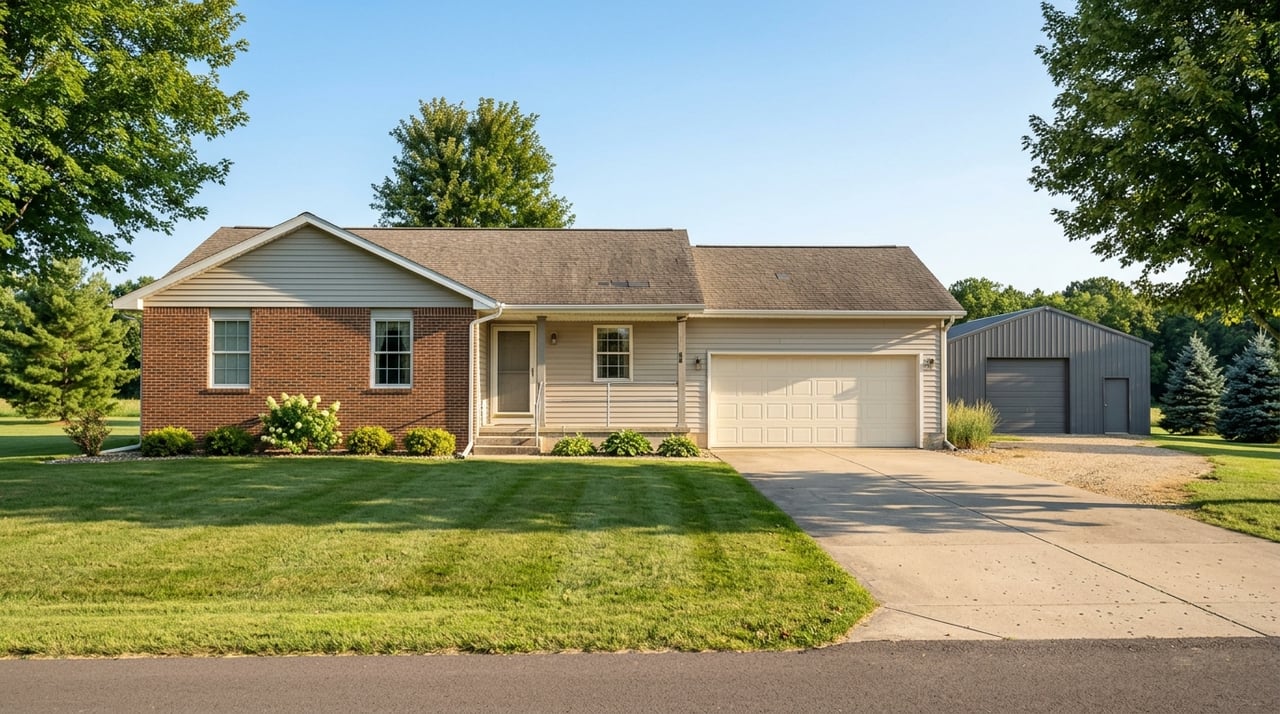
Buying Acreage Or Hobby Properties In Hobart
June 11, 2026
June 11, 2026
If you are dreaming about more space in Hobart, you are not alone. Acreage and hobby properties can offer room for a shop, storage, gardens, or a more rural feel, but they also come with a very different set of rules than a standard in-town home. Before you fall in love with a parcel, it helps to understand how zoning, utilities, and site conditions can shape what you can actually do there. Let’s dive in.
If you are shopping for acreage or a hobby property in Hobart, one of the first things you may notice is that supply is tight. Current public search pages show 64 active homes for sale in Hobart, while the land search shows just 9 results.
That smaller pool matters because it can make the acreage segment feel competitive and fast-moving. Public land listings in Hobart range from about 0.38 acres to 2.27 acres, with prices roughly between $79,900 and $239,900, including one current 1.2-acre Hobart-address parcel listed at $239,900.
It also helps to widen your search habits. The broader 54155 area shows small-acreage opportunities too, including examples around 2.04 acres at $170,000 and 4.11 acres at $189,900, which suggests buyers looking for elbow room may need to monitor more than the typical home search filters.
In Hobart, acreage alone does not tell you what a property can support. The village zoning chapter applies to all lands and waters within the village, and land use is limited to the uses allowed in each district unless the village approves something additional.
That means two parcels with similar sizes can have very different uses depending on zoning. If you are thinking about a barn, chickens, hobby animals, extra storage, or a custom home layout, the zoning district needs to be checked before anything else.
For many suburban-acreage buyers, the R-2-R Rural Residential District is one of the most relevant districts to understand. It allows single-family dwellings on one-acre minimum lots with 150 feet of frontage.
The required lot plan also needs to show the house, septic system, accessory building, and well. That requirement is a practical reminder that even if the acreage number looks good on paper, the usable layout of the site still matters.
R-2-R also allows up to six chickens when licensed. At the same time, Hobart’s animal code otherwise prohibits poultry and livestock, including horses, cattle, sheep, goats, pigs, and swine, unless a specific zoning district permits them.
If your goal is a property with more agricultural flexibility, A-1 and A-2 deserve careful review. These districts are much more agriculture-oriented than a typical suburban acreage setting.
In A-1 Agricultural District, agriculture, livestock raising, riding academies, and stables are explicitly permitted. A single-family dwelling in A-1 requires a five-acre minimum parcel and 200 feet of frontage, with setbacks of 40 feet in front and 25 feet on the side and rear for principal and accessory buildings.
A-2 also uses a five-acre minimum and 200 feet of frontage for a single-family dwelling. It is framed around preserving prime agricultural land, so buyers should view it as a district with a stronger agricultural preservation purpose than a casual hobby-lot designation.
One of the biggest misconceptions with acreage is assuming that more land automatically means more freedom for animals. In Hobart, that is not how the code works.
If you want chickens, horses, or other animals, the answer depends on the zoning district, not just the parcel size. For example, up to six chickens may be allowed in R-2-R with a license, while livestock and similar animals are otherwise prohibited unless the zoning district specifically allows them.
That makes a pre-offer zoning review especially important for equestrian-minded buyers and anyone planning a true hobby setup. If animals are part of your long-term vision, it is worth confirming those rules early.
For many acreage buyers, the outbuilding matters almost as much as the house. Whether you want a detached garage, workshop, toy storage, or a barn-style utility building, Hobart has real size and timing limits to know up front.
In residential settings, Hobart generally limits detached accessory buildings to one per lot. The maximum size is the greater of 864 square feet or 1/60 of the lot square footage, but no more than 2,500 square feet, and the height cap is 25 feet.
There is another key rule that often surprises buyers. An accessory building cannot be built before a principal structure exists or before a permit for the principal structure has been issued.
Utility service can vary across Hobart, so it is smart not to make assumptions based on a map pin alone. According to the village utility information, northern Hobart water comes through Green Bay Water Utility, southern Hobart water comes through the Village of Ashwaubenon, and wastewater is collected by Hobart and treated by NEWWater.
That suggests some acreage-style parcels may have access to full municipal service. Even so, buyers should verify the exact utility status of the specific parcel they are considering, because utility availability can directly affect cost, design, and timeline.
If a parcel is not connected to municipal sewer, septic planning becomes a major part of due diligence. Brown County states that its sanitary regulations apply to development not connected to municipal sewer and that a sanitary permit application must be submitted for every new POWTS.
The county and Wisconsin DSPS both note that site and soil suitability determine whether a private onsite wastewater system can work. In practical terms, that means you will want to confirm where the septic field, reserve area, and replacement area could fit before assuming the lot will support the home and outbuilding plan you have in mind.
This is especially important on smaller acreage parcels. A lot may seem large enough at first glance, but the usable building envelope can shrink quickly once septic requirements are factored in.
If a property relies on a private well, testing should be part of your planning. Wisconsin DNR says a well inspection or water testing is not required for a property transfer, but if an inspection is done, it must be completed by a licensed well driller or licensed pump installer.
For property transfer, DNR says drinking-water wells are sampled for coliform bacteria, nitrate, and arsenic. DNR also recommends routine testing for private well users, including annual bacteria and nitrate testing, and its testing guide says Brown County well users should test for arsenic annually as well.
For buyers, that means a private well should be viewed as a system to evaluate, not just a box to check. Water quality, maintenance, and testing history all matter.
If a parcel is near water or low-lying areas, base zoning may be only part of the story. Hobart’s shoreland zoning rules apply to lands within defined distances of navigable waters and rely on DNR and floodplain maps.
The village floodplain ordinance also reviews permit applications to help ensure development is reasonably safe from flooding and does not obstruct flow or increase regional flood height. On some lots, these overlays can affect where you build, what you build, and how much of the site is truly usable.
That is why small-acreage buyers should not stop at the lot size listed online. The shape, topography, and overlays can be just as important as the total acreage number.
When you are buying acreage or a hobby property in Hobart, a careful review up front can save time, money, and frustration later. Before writing an offer, it helps to work through the basics in a clear order.
Here is a practical checklist to keep in mind:
The goal is simple. You want to know whether the property supports your real plans, not just whether it looks good in a listing photo.
Acreage and hobby properties can be rewarding purchases, but they usually require more investigation than a standard residential lot. In Hobart, questions about chickens, horses, barns, septic systems, utility access, and buildability all come back to the specifics of the parcel.
That is where experienced local guidance can make a real difference. When you understand the zoning district, utility setup, and site constraints before you move forward, you can shop with more confidence and avoid surprises later.
If you are considering acreage, hobby property, or land in Hobart, Becky Buckland Collaborative can help you evaluate the details, compare opportunities, and move forward with a strategy that fits your goals.
Stay up to date on the latest real estate trends.
Real Estate
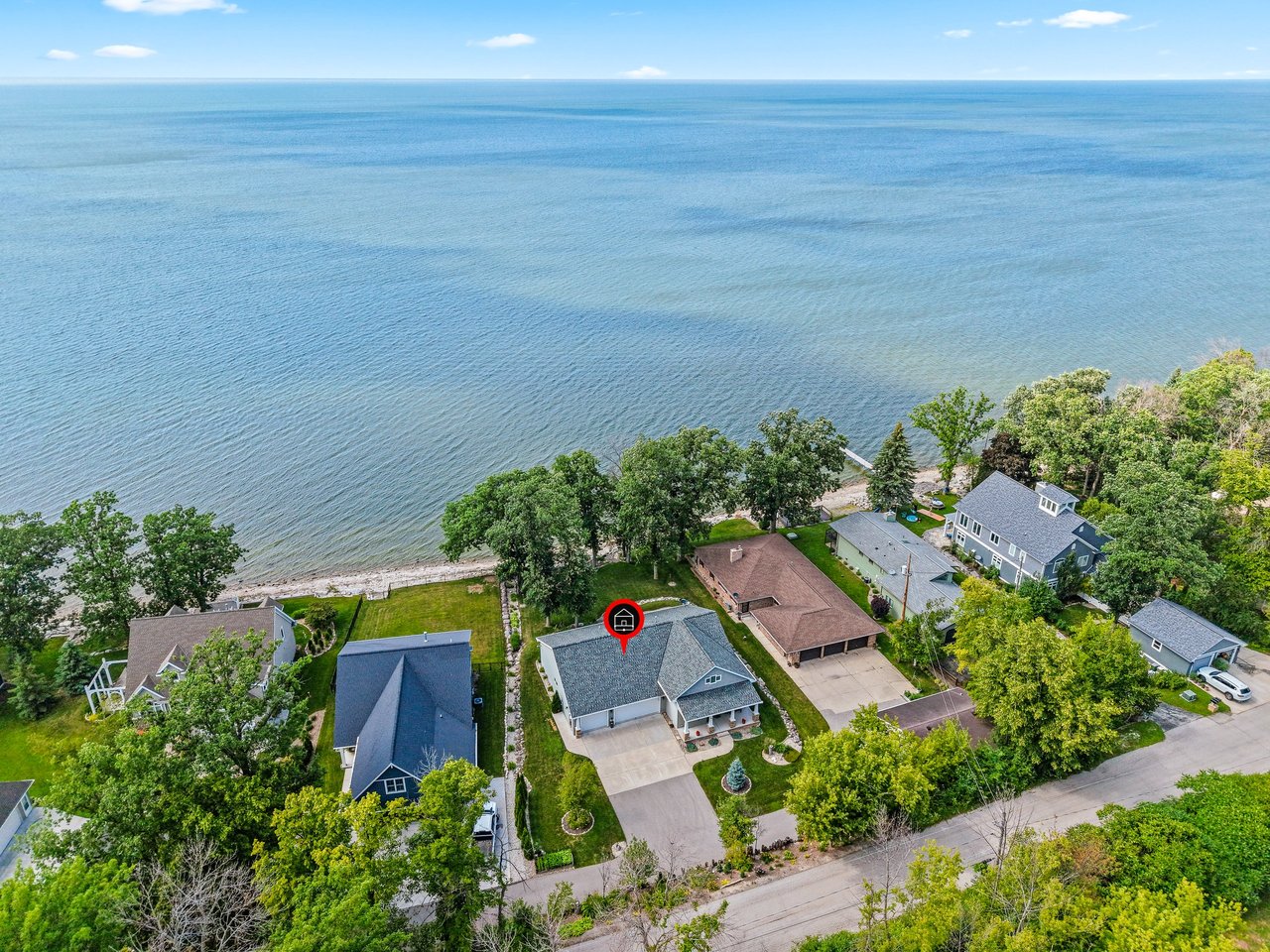
New Waterfront Home for Sale in Green Bay Featuring Bay Views, an Oversized Garage, and Direct Access to One of Northeast Wisconsin's Most Desirable Waterfront Communi… Read more
Whether you’re ready to buy, sell, or invest, Becky Buckland Real Estate Collaborative is here to make the process smooth and successful. Put our local expertise and dedication to work for you.