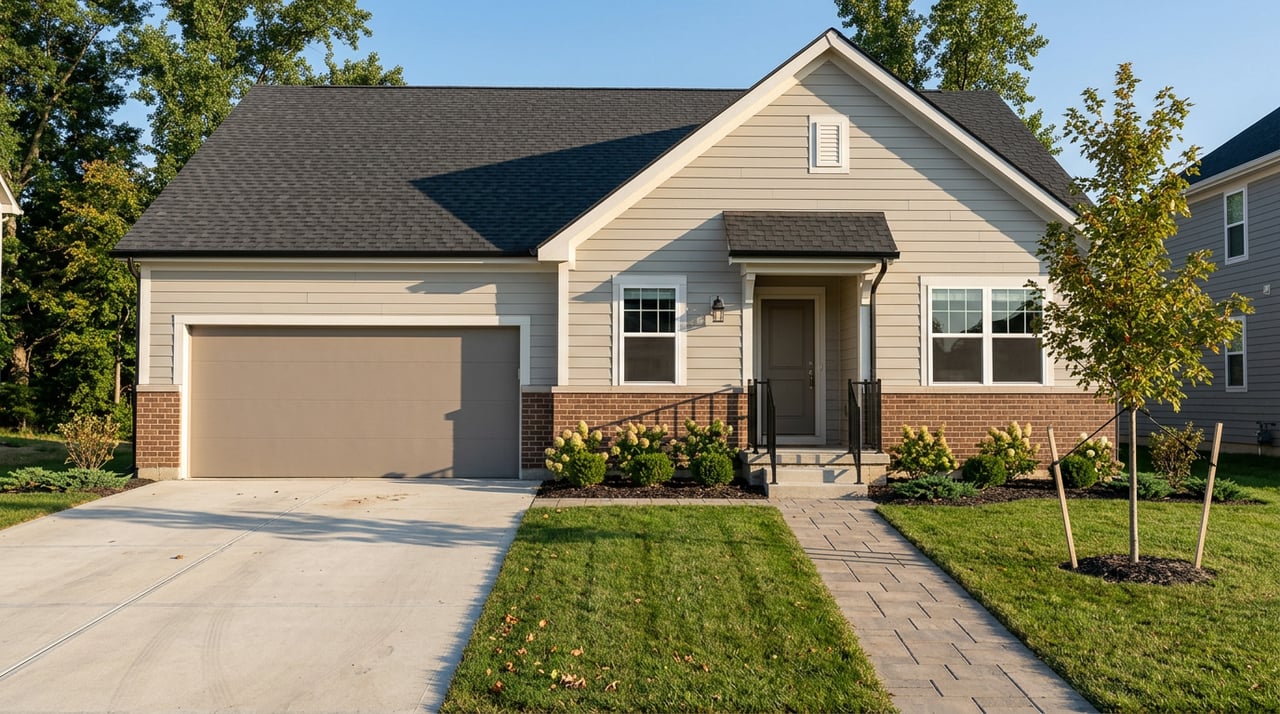
Considering New Construction in Hobart? Key Factors to Weigh
March 24, 2026
March 24, 2026
Thinking about building a brand-new home in Hobart? You are not alone. New construction can be a smart way to get modern efficiency, a floor plan that fits your life, and fewer early repairs. It also comes with choices about lots, builders, financing, and timelines that can feel overwhelming at first. In this guide, you will learn the key factors to weigh in Hobart, how to compare options confidently, and what steps help you avoid surprises. Let’s dive in.
Hobart sits in the Green Bay metro and tends to run higher than the broader Brown County market. Recent snapshots put Hobart’s typical sale and value figures above the county overall, and new builds often command a premium due to larger homes, newer neighborhoods, and site improvements. Regional permitting picked up in 2024, which supports ongoing new-home activity across the metro. The U.S. Department of Housing and Urban Development (HUD) highlighted nearby new-home examples that start around $469,000 for smaller homes and reach the mid to upper $700s for larger builds, which helps frame local pricing bands for today’s new construction. You can review HUD’s Green Bay analysis for context on pricing and permitting trends in the area in 2024. HUD’s regional report offers details on recent pricing and permits.
For comparison, the countywide single-family median has generally been lower than Hobart’s local figures. That gap is normal for a higher-priced pocket and reflects differences in home size, age, and features. If you are comparing Hobart to nearby communities, factor in lot size, finishes, and property taxes by school district when you set your budget.
Before you fall in love with a floor plan, make sure the lot works for your goals and budget. In Hobart, a few items deserve early attention.
Some areas of Hobart have public water and sewer, while others require a private well and septic. Municipal water service is supplied by different utilities depending on location, and wastewater is handled by the Village’s collection system. Costs to connect, plus meter and stormwater charges, vary by address. Confirm service availability and typical hookup fees for your specific lot. Start with the Village’s utility resources. See Hobart’s water and sewer information.
Hobart’s zoning code lays out residential districts and rules such as minimum lot sizes, frontage, and floor-area limits. If the parcel sits in a planned development, recorded declarations may add design or use restrictions that go beyond basic zoning. Always verify the zoning designation and review any covenants or HOA rules before you buy. Review Hobart’s zoning code and overlays.
Low-lying or wetland-adjacent parcels can limit where you can build and can increase engineering costs. Ask whether FEMA floodplain or local conservation restrictions apply and order a topographic survey, wetland flagging, and soils review to understand your true buildable area. The zoning code includes floodplain and shoreland provisions, so check early. Check relevant code sections here.
The Village’s Planning and Code Compliance team offers plan-review checklists, fee schedules, and monthly permit reports. They encourage early conversations to keep your plan on track. Build realistic time into your schedule for submittal, review, and any corrections. See Hobart’s building and code resources.
Hobart spans multiple school districts. Tax rates vary by district and other local factors, which affects your carrying costs. Before you commit to a lot, confirm the school district and estimate the annual property tax for that parcel using county-published rates. Use Brown County’s tax-rate detail to estimate taxes.
You will find three common builder categories in the Hobart area:
Upgrades can add significant cost, so clarity matters. Expect decisions around kitchens, bathrooms, flooring, lighting, electrical packages, HVAC options, garage size, exterior materials, and landscaping. Ask how allowances work, whether they are fixed-dollar credits or cost-plus, and when selections are locked so you do not trigger delays or change-order premiums. For a sense of how allowances and selection milestones are typically handled, review a sample builder process. See a builder’s selection and allowance overview.
Pro tip: request a detailed spec sheet with brand names and model lines, plus sample invoices for common upgrades. This helps you predict real costs, not just allowances.
Local examples and industry references suggest a practical planning range for new single-family homes in the Green Bay metro of roughly $200 to $350 per finished square foot before land, with higher-end finishes or complex sites pushing above that range. HUD’s recent Green Bay analysis cites new-home examples from about $469,000 for smaller builds to the mid and upper $700s for larger homes, which implies mid $200s to low $300s per finished square foot in many cases. Always get a written estimate from your builder for accuracy. Review HUD’s pricing examples and trends.
Remember that site work and the lot itself are separate line items. Grading, utility runs, well and septic where needed, driveway length, tree clearing, and soils remediation can add tens of thousands of dollars. Ask for itemized site-prep estimates and confirm who is responsible for unforeseen conditions.
Most new builds use one of two approaches:
Lenders release funds in draws tied to milestones and inspections. Expect to provide plans, specs, a detailed cost breakdown, and builder credentials. Ask about appraisal timing, draw schedules, and rate locks so your financing lines up with your build timeline.
If you want a clear path from lot selection to final walkthrough, local guidance makes all the difference. Our team regularly helps clients compare Hobart lots, review builder proposals, and navigate permits, financing, and selections with confidence. For a one-on-one plan tailored to your goals, connect with the Becky Buckland Collaborative to get started.
Stay up to date on the latest real estate trends.
Whether you’re ready to buy, sell, or invest, Becky Buckland Real Estate Collaborative is here to make the process smooth and successful. Put our local expertise and dedication to work for you.