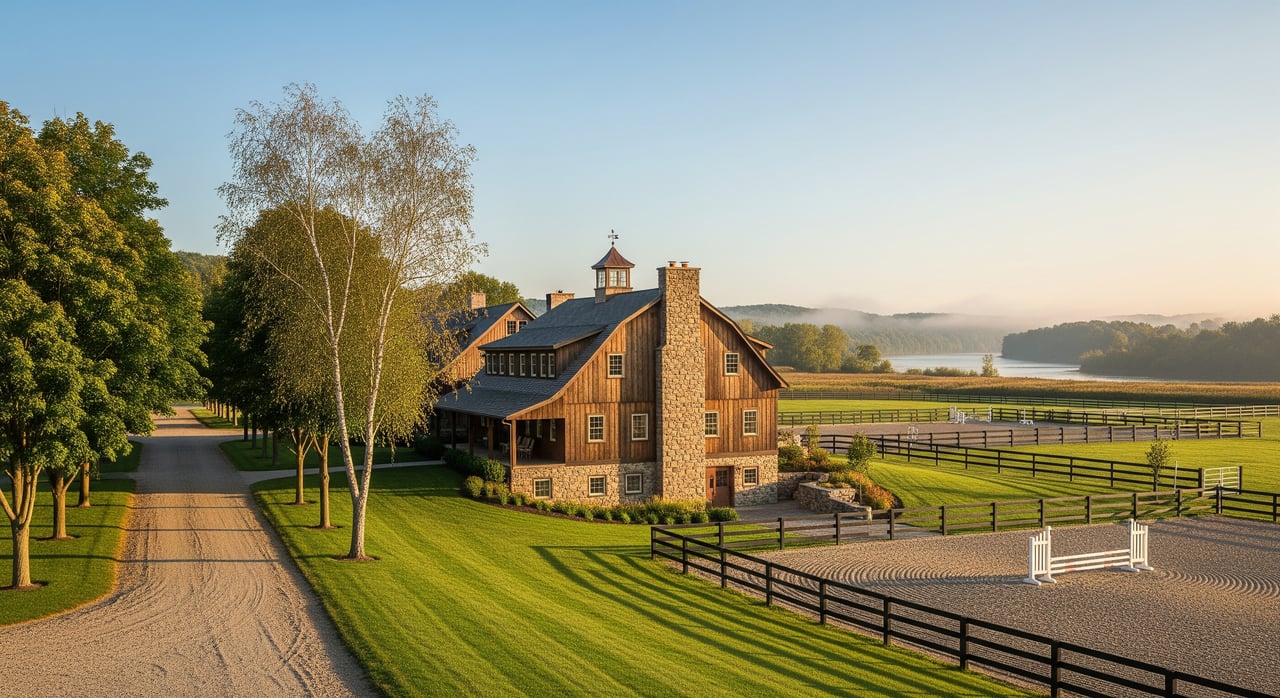
Buying an Equestrian Property in Oconto WI: Key Points
January 8, 2026
January 8, 2026
Picture your horses grazing on healthy pasture, trails just beyond the fence, and a warm, well-planned barn ready for winter. If you are eyeing equestrian property in Oconto, you want more than charm. You need land that works for horses and rules that work for you. In this guide, you will learn how to evaluate acreage, confirm zoning, plan for water and manure, and budget for the seasons in Northeast Wisconsin. Let’s dive in.
Buying horse property starts with confirming what you can do on the land. Contact Oconto County Planning and Zoning to verify the parcel’s zoning district, permitted uses, setbacks, and any conditional use permits for commercial activities such as boarding or training. Town-level offices may also require driveway or culvert permits and can advise on local ordinances.
If the property is near rivers, streams, or the Bay of Green Bay, shoreland and floodplain rules can affect building placement and manure handling. Review FEMA flood status and ask Wisconsin DNR about shoreland buffers and wetland protections. For operations with larger animal numbers, explore Wisconsin DATCP guidance and USDA NRCS programs that may apply to nutrient management and conservation.
Usable acres matter more than total acres. As a general guideline, plan for about 1.5 to 3 acres per horse for grazing, then adjust for pasture productivity and your hay program. You will likely supplement hay in winter.
Check soils and topography before you fall in love with a view. USDA NRCS soil surveys can help you understand drainage, fertility, and suitability for pasture, arenas, and septic. Low, poorly drained ground increases mud and reduces where you can place barns, runs, and storage.
Horses drink several gallons a day, especially in summer. Verify well yield and recovery rate, and confirm there is enough capacity for household use plus barn needs like wash stalls or heated waterers. Keep proper separation between wells and manure storage or spreading areas.
Flood risk and high-water tables can disrupt access and create runoff concerns. Identify any floodplain or wetland areas so you avoid siting barns, arenas, or manure storage where they can flood. Plan for spring mud season with sacrifice paddocks, gravel, and drainage so you protect pastures and keep gates and drive lanes usable.
Most sport horses do well in 12-by-12 to 12-by-14 stalls, but size and layout depend on your program. If an indoor arena is on your wish list, look for a clear-span design with proper footing, good ventilation, and an orientation that manages wind and seasonal sun. Roofs and structures should be rated for local snow loads.
Safe, efficient operations require the right utilities. Confirm electrical service, lighting, outlet placement, and any heated fixtures. For access, review driveway grades, permits, and culvert sizing, and make sure there is adequate trailer parking and a safe turning radius for visitors and deliveries.
Plan a manure system on day one. Dry or covered storage helps control runoff, and you may need a nutrient management plan if your operation grows. Avoid spreading near wells, shorelines, or wetlands, and maintain setbacks from streams and waterways.
To protect water quality, use vegetated buffers along waterways and stabilize any streambanks. NRCS and state programs can offer technical guidance and cost share for pasture improvements, stream crossings, watering systems, and manure management projects.
Budget for the ongoing costs that keep horses healthy and facilities safe. Major line items include hay and feed, bedding, manure hauling or spreading, utilities, equipment upkeep, fencing and footing maintenance, and veterinary, farrier, and dental care.
Northeast Wisconsin has long, cold winters, so plan for indoor shelter, heated waterers or frost-free hydrants, and ample forage. Spring brings mud, which is easier to manage with sacrifice areas and rotation. In summer, focus on rotational grazing, parasite and fly control, and pasture rest to keep forage productive.
You may be able to run a boarding or training business, but approvals depend on zoning and permitted uses. Commercial activity can also affect traffic, parking, signage, and septic capacity. Factor in staffing and daily management if you plan to offer lessons or boarding.
Insurance changes with business use. Standard homeowners policies often exclude equine-related liability. Discuss farm or ranch policies, commercial equine liability, and professional coverage if you teach or train on-site.
How you finance depends on the property’s primary use. If the home is primarily residential with private horses, a standard residential mortgage may be possible. If it functions as an agricultural business, lenders may require a farm or agricultural loan, and programs through USDA Rural Development or FSA could be options. Some loan programs limit properties with significant agricultural use, so confirm lender policies early.
Insurance should match your risk profile. Consider farm or ranch coverage for structures and equipment, commercial liability for lessons or boarding, and mortality or major medical for valuable horses. For property taxes, Wisconsin’s use-value assessment programs may reduce taxes for qualifying agricultural or managed forest land. Personal-use horses usually do not qualify, so check with the county assessor about current rules.
Use this quick roadmap to reduce surprises.
For parcel-specific answers, contact Oconto County Planning and Zoning, your town clerk for driveway access rules, and the county land records or assessor for maps and tax questions. The Wisconsin DNR and FEMA can clarify shoreland, wetland, and floodplain issues. UW–Madison Division of Extension in Oconto County and USDA NRCS can help with soils, pasture planning, and conservation options.
Buying an equestrian property is part land evaluation, part facility planning, and part regulatory navigation. You deserve a partner who understands all three. With decades of local experience and equestrian specialization, our team helps you verify zoning, assess usable acres, evaluate barns and arenas, and plan upgrades that fit your goals and budget.
Ready to walk properties with a knowledgeable guide and a clear plan? Request a personalized consultation with the Becky Buckland Collaborative.
Stay up to date on the latest real estate trends.
Whether you’re ready to buy, sell, or invest, Becky Buckland Real Estate Collaborative is here to make the process smooth and successful. Put our local expertise and dedication to work for you.